Ad-Free Photo Editing: RetouchPi's Canvas Has Zero Ad Slots
"Ad-free photo editing" carries at least three meanings: no ad slot on the canvas you edit on; not a single ad anywhere on the site; and "you bought a tier, so we stopped showing you ads". The three are verified in completely different ways, and blending them is how a claim turns into a lie. This page lays out all three readings for our version: zero ad slots on the canvas (counted in the DOM on 2026-10-10), three ad slots in the landing page's right rail (the whole column stops rendering under the ad-free tier), and what that one-time purchase actually buys.
Updated 2026-10-10 · ~ 1256 words
One phrase, three meanings
- The canvas reading: whether the screen you edit on - toolbar, canvas, side rails, status bar - contains an ad slot. Verified by counting selectors in the DOM; what can be counted can be counted by anyone.
- The site-wide reading: from the landing page to the terms page, not one ad slot renders. Verified page by page; a single slot left on any page makes the sentence false.
- The account reading: you paid once, so this one site stops showing you ads. Verified by opening the site twice, with and without the tier, and watching whether the column is there.
We claim only the first, plus the true scope of our own tier under the third. The second we cannot claim: the landing page's right rail does carry ad slots, so writing "no ads anywhere on the site" would be false advertising, and any reader opening the landing page once would catch it on the spot.
Three readings for this version
| Surface | Ad slots | How it was counted |
|---|---|---|
| The editing canvas (the whole editing screen) | 0 | Nine ad-slot selectors counted in the DOM on 2026-10-10, a real photo on the canvas |
| The editor's static page source | 0 | grep for adsbygoogle and googlesyndication, zero occurrences each |
| The landing page's right rail | 3 | Three ad slot components; under the ad-free tier the whole column does not render |
The third row is the most important honest sentence on this page: ad-free here is a tier you can buy, not the default state; the default state is a clean canvas with ads on other pages of the site. Only by writing the two apart does the reader get a real choice.
What the one-time tier buys
Ad-free is a one-time purchase: US$9.99, paid once, not a subscription, with no expiry date. What it buys is that this one site stops showing you ads - the landing page's right rail stops rendering entirely. It unlocks no editing feature, because editing features cost nothing to begin with: opening files, layers and masks, selections and paths, and exporting all take neither credits nor a subscription.
It is a separate product from credits. Credits are spent only on AI generation and edits, at 1 credit = 1 US cent, quoted before you commit the job; buying ad-free or not changes not one digit of the credit price list. The reverse also holds: buying credits changes nothing about ads, since the canvas never had a slot and the site pages keep theirs unless what you bought was the ad-free tier.
The Remove ads entry in the editor's status bar leads to this same tier: one-time, not a subscription. It sits in the status bar rather than on the canvas for exactly this reason - there is no canvas slot to remove, what gets removed is the site-side one.
How to verify it yourself
- Open the editor, open a real photo, and count the nine ad-slot selectors in the console: that is the canvas reading.
- Filter the network panel by the googlesyndication and doubleclick domains and edit for three minutes: not one request to either domain re-confirms the canvas reading.
- Search the page source for
adsbygoogle: zero occurrences in the editor's single static page. An ad script must leave its name in the source to load at all. - Open the landing page twice, once signed into an account holding the ad-free tier and once not: whether the right rail column is there is the account reading.
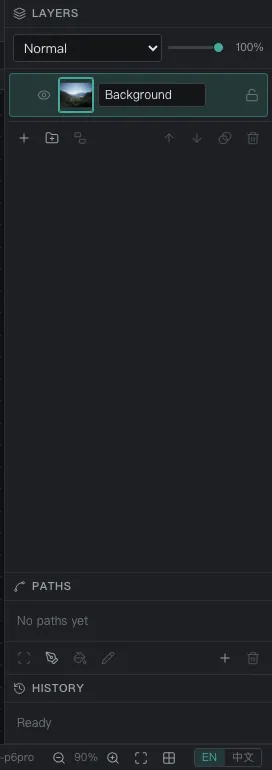
With all four done, ad-free stops being a slogan for you and becomes four readings you took yourself. These same four are what we ran on our own version, plus one full-screen capture kept as evidence.
What the tier does not reach
- It does not reach other sites: it takes effect only on the site you bought it from, and other products' ads are other products' ledgers.
- It does not reach browser extensions, system-level blocking or the router layer: those are a different mechanism, unrelated to this tier and not a substitute for it.
- It does not reach the network hop of the AI step: AI generation and edits go through a server by design, which is the feature's road and not the ads' road, and ad-free will not turn it into local computation.
Stating the scope narrowly is the only honest way to sell this tier. The wide-scope version of the copy would get corrected for us by the first reader who opens the landing page.
What this page does not claim
- No claim of a site-wide ad-free default: the default is a clean canvas with ads on other pages of the site; a clean whole site is bought, not given.
- No offline claim: the editor is a web page and there is no editor without a network. Ordinary retouching stays on your machine; AI generation and AI edits are the one step that touches a server.
- No claim that editing is paid: the editor is free, carries no subscription, and lets you edit and export without an account; the only paid things are the AI step and this one-time tier.
- No claim about other products' ad figures: the 5%-15% and the blocker-downgrade story live on the other page, quoted from that product's own support docs; we neither audit nor generalise them.
Questions people ask
Is ad-free a subscription?
It is not. A one-time US$9.99, bought outright, with no expiry date and no auto-renewal. It is a separate product from credits, and buying one leaves the other's price list untouched.
Without the tier, are there ads on the editing canvas?
No. Zero ad slots on the canvas is the default state, not something bought: counted in the DOM on 2026-10-10, nine selectors, zero hits. What the purchase removes is the ad slots on other pages of the site.
Does ad-free make AI cheaper?
It does not. The credit price list and the ad-free tier do not touch each other: 1 credit = 1 US cent, per image, quoted before you commit the job. Each tier governs its own one thing.
So how do you actually make money?
Three streams: credits for AI generation and edits, display ads on the site's pages, and this one-time purchase. The editor itself being free is the least intuitive of the three, and the reason this page exists.
Read next
- Open camera RAWSeven real camera files, measured one by one
- Remove background119 ms, and the result is a layer mask
- ID photoSix named sizes, exported at 300 dpi
- Edit PSD onlineOpens layered, edit one layer, saves back layered
- JPEG to PDFOne pixel per point, read back byte by byte
- AI pricingOne credit is one US cent, tier by tier
- CapabilitiesWhat it opens, and what it exports
- Open CMYK filesNine samples opened, 254-261 ms each
- CMYK vs sRGBOne file, two colour spaces, a measurable gap
- Where the ads come fromZero ad slots on the canvas, screen-share maths
- AI editing and layersResults land back on the source layer's rectangle, ±3 px
- Where your file goesEight actions, request lists, zero picture bytes out
Open the editor first, decide later
A clean canvas is the default state, so nothing needs paying before you can verify it. Open a photo of your own and run the four counts above; then decide whether the US$9.99 tier is worth it. The decision sits with you, not with the copy.
As an Amazon Associate, we earn from qualifying purchases.